MomoNashi
Alphabet Puzzle Games for Kindergarten - 26 Pairs Self-Correcting ABC Puzzle Alphabet Learning Toys Matching Game - ABC Learning for Toddlers Letters Matching Game Preschool Educational Toys
Couldn't load pickup availability
About This
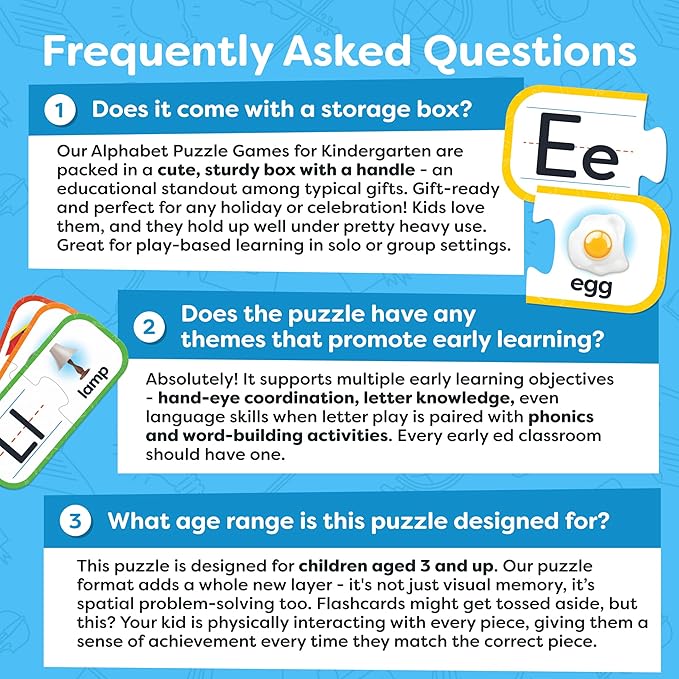
- 26pc Alphabet Puzzle Set with Colorful, Self-Correcting Letter Puzzle Cards. Each card set is designed with interlocking joints for a rewarding alphabet matching game. Ideal for abc puzzles for kids ages 3-5, it fosters alphabet recognition and letter-sound phonics. Perfect for at-home learning or kindergarten classroom supplies that support tactile learning and fine motor skill development through educational play.
- Promote Early Literacy for Little Ones. ABC Puzzle includes both uppercase and lowercase letters paired with phonics-based images. This interactive letter puzzle for toddlers 3-5 supports alphabet differentiation, helping kids improve abc recognition, memory retention, and vocabulary. A classroom-ready alphabet puzzle game for kindergarten and homeschool supplies built for cognitive growth through hands-on learning.
- Made from thick, durable 2.5mm cardstock. This letter puzzle withstands daily toddler use while remaining easy for small hands to handle. Sized at 3"x7", it builds hand-eye coordination and fine motor strength as children manipulate pieces during abc recognition games. A lasting learning resource for preschool classrooms, home school setups, and early childhood educators who value durability and engagement.
- Portable Educational Toy for Travel. This abc puzzle makes learning letters fun at home or on the go - ideal for road trips, quiet play at restaurants, or kindergarten classroom activities. Supporting multi-sensory alphabet learning, it integrates phonics, visual recognition, and tactile interaction. A screen-free, engaging letter game that enhances early reading skills while providing educational entertainment.
- ABC Puzzles for Toddlers 1-3 double as Impactful Educational Gifts. Perfect for birthdays, holidays, or back to school season. Designed for toddler alphabet learning, they combine letter recognition with fun puzzle-solving for improved phonics and fine motor development. A must have educational toy for parents, teachers, and gift-givers. Add to Cart now and support your child's love for learning through play!
Share

Collections
-
Science Kits & Toys
Discover the perfect blend of fun and learning with the Science Kits...
Little Shine | Gentle, Safe, and Nurturing Baby Essentials
At Little Shine, we understand that every little one deserves the very best. Our mission is to provide parents with high-quality, safe, and thoughtfully designed baby products that make daily care easier, more joyful, and more nurturing.
Blog posts
View all-
Common Discipline Mistakes Experts Say Don’t Work
Discipline often fails not because parents try less, but because children learn moods faster than rules. Experts explain the patterns that don’t work.
Common Discipline Mistakes Experts Say Don’t Work
Discipline often fails not because parents try less, but because children learn moods faster than rules. Experts explain the patterns that don’t work.
-
Discipline by Age: Effective Discipline Strateg...
Discipline works best when it matches a child’s developmental stage. This guide explains effective, age-based discipline strategies that actually support self-regulation.
Discipline by Age: Effective Discipline Strateg...
Discipline works best when it matches a child’s developmental stage. This guide explains effective, age-based discipline strategies that actually support self-regulation.
-
What Should You Do When Your Child Doesn’t Listen?
When children don’t listen, it’s often a skill gap—not defiance. This guide explains why it happens and how parents can respond calmly and effectively.
What Should You Do When Your Child Doesn’t Listen?
When children don’t listen, it’s often a skill gap—not defiance. This guide explains why it happens and how parents can respond calmly and effectively.