WeeGallery
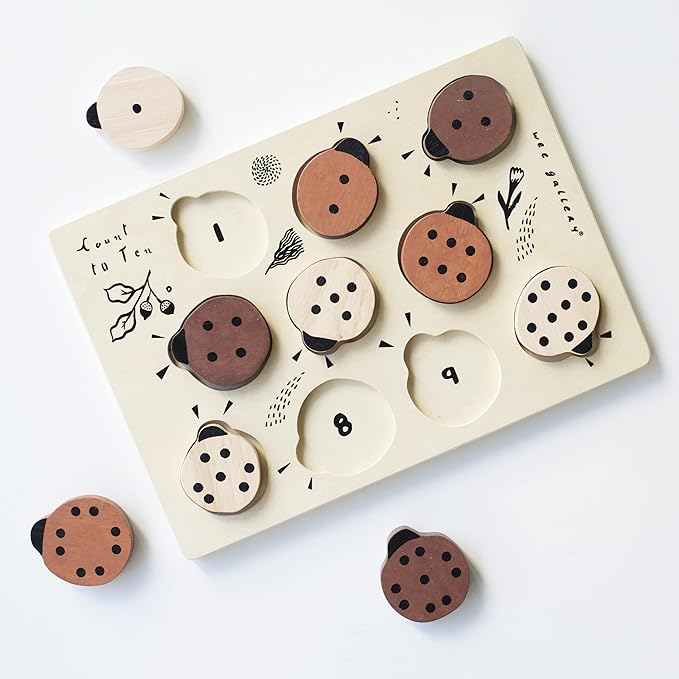
Wee Gallery Wooden Tray Puzzle Count to Ten Ladybugs, Montessori Toy for Toddlers and Preschoolers for Early Learning and Fine Motor Skill Development, Sustainable Educational Puzzle for Kids
Couldn't load pickup availability
About This
- ENGAGING WOODEN PUZZLE FOR COGNITIVE DEVELOPMENT: This animal-themed wooden tray puzzle by Wee Gallery features charming animal illustrations for early learning. As children fit each piece into place, they strengthen problem-solving abilities, spatial awareness, and critical thinking which are essential skills for preschool and toddler development. It's the perfect learning toy to support focus and independent play.
- PROMOTES SKILL DEVELOPMENT THROUGH PLAY: As your little one engages with our thoughtfully designed wooden toddler puzzles, they're developing essential fine motor skills. From enhancing hand-eye coordination and fine motor control to encouraging early problem-solving, this activity offers a holistic learning experience that grows with your child. It’s a playful, screen-free way to nurture focus, independence, and foundational abilities through Montessori-inspired learning.
- CHILD-FRIENDLY & BUILT TO LAST: Crafted with care from responsibly sourced rubberwood and finished with safe and water-based paints, this child-safe wooden puzzle offers safe, durable play for toddlers and preschoolers. Designed with six sturdy pieces and a smooth tray base, it supports long-lasting use across early learning stages, perfect for parents seeking natural, sustainable toys.
- INTERACTIVE, TACTILE LEARNING EXPERIENCE: This hands-on wooden puzzle tray offers a rich, screen-free learning activity that encourages toddlers and young children to explore shapes, textures, and problem-solving through play. Perfect for shared moments between parents, grandparents, and caregivers, it supports early childhood development while making learning feel fun, engaging, and collaborative.
- SPARKS IMAGINATION AND NATURE-INSPIRED PLAY: More than just a puzzle, this wooden animal learning toy invites children to become curious explorers. As they interact with the beautifully illustrated animal pieces, kids can create their own stories and role-play nature scenes. These floor puzzles offer creative toddler activity that blends open-ended play with early language and storytelling development.
Share

Collections
-
Science Kits & Toys
Discover the perfect blend of fun and learning with the Science Kits...
Little Shine | Gentle, Safe, and Nurturing Baby Essentials
At Little Shine, we understand that every little one deserves the very best. Our mission is to provide parents with high-quality, safe, and thoughtfully designed baby products that make daily care easier, more joyful, and more nurturing.
Blog posts
View all-
Common Discipline Mistakes Experts Say Don’t Work
Discipline often fails not because parents try less, but because children learn moods faster than rules. Experts explain the patterns that don’t work.
Common Discipline Mistakes Experts Say Don’t Work
Discipline often fails not because parents try less, but because children learn moods faster than rules. Experts explain the patterns that don’t work.
-
Discipline by Age: Effective Discipline Strateg...
Discipline works best when it matches a child’s developmental stage. This guide explains effective, age-based discipline strategies that actually support self-regulation.
Discipline by Age: Effective Discipline Strateg...
Discipline works best when it matches a child’s developmental stage. This guide explains effective, age-based discipline strategies that actually support self-regulation.
-
What Should You Do When Your Child Doesn’t Listen?
When children don’t listen, it’s often a skill gap—not defiance. This guide explains why it happens and how parents can respond calmly and effectively.
What Should You Do When Your Child Doesn’t Listen?
When children don’t listen, it’s often a skill gap—not defiance. This guide explains why it happens and how parents can respond calmly and effectively.